Reflections of a Trainer and Missionary Among the Resilient Catechists of South Sudan
by Father Christy John CMF – Solidarity with South Sudan Pastoral Programme Administrator
Seeing is Believing: Meeting the Living Stones
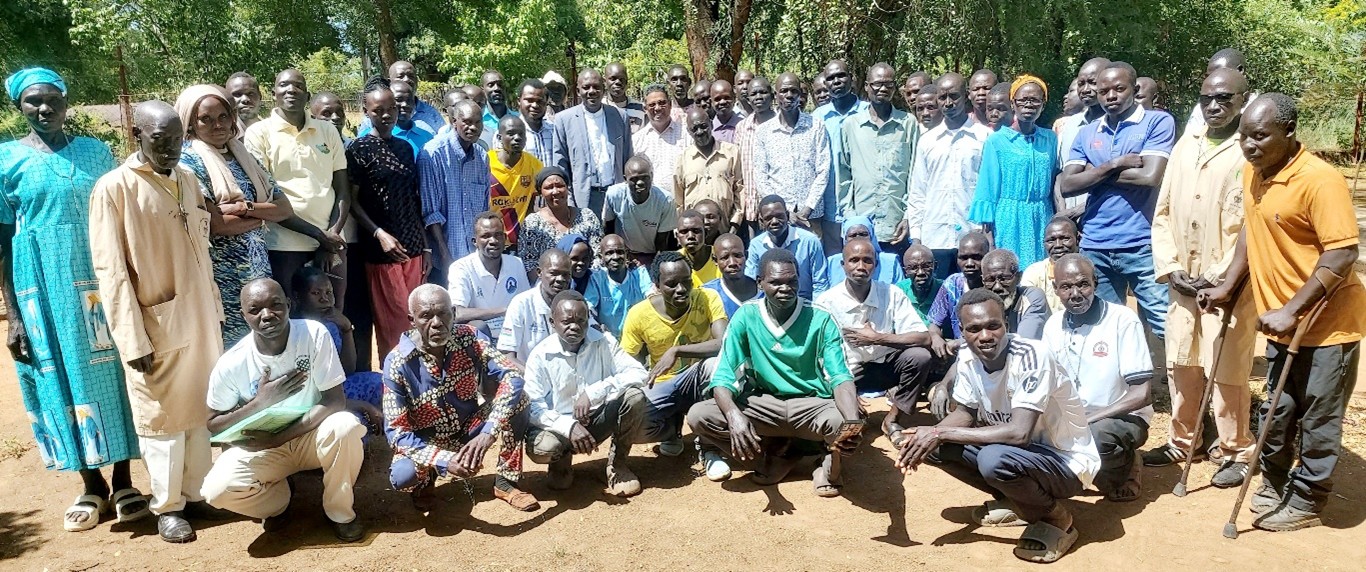
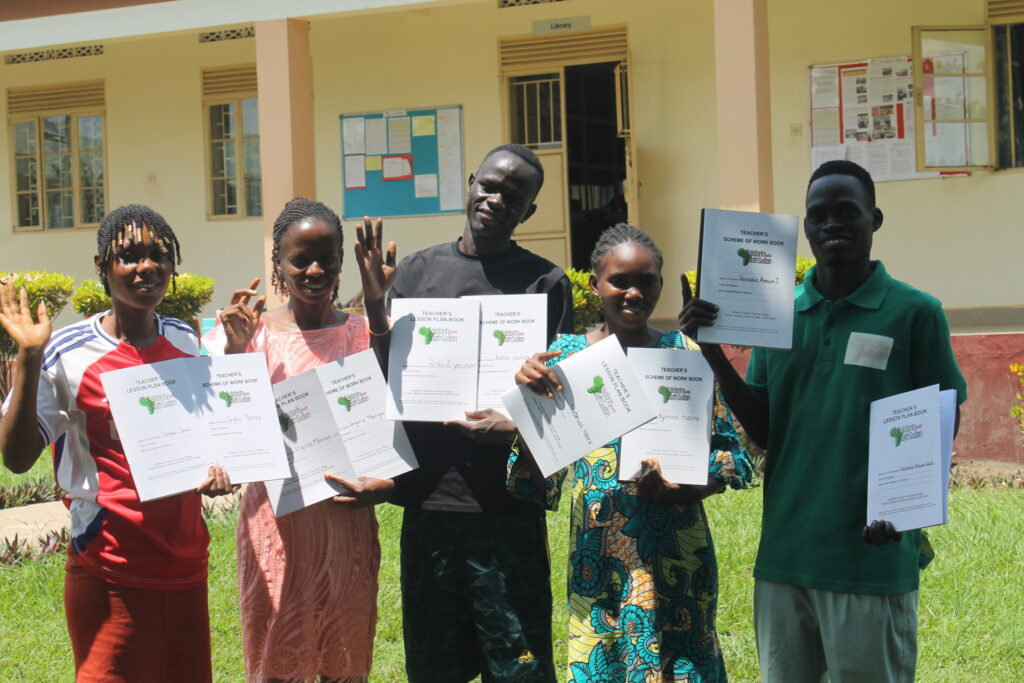
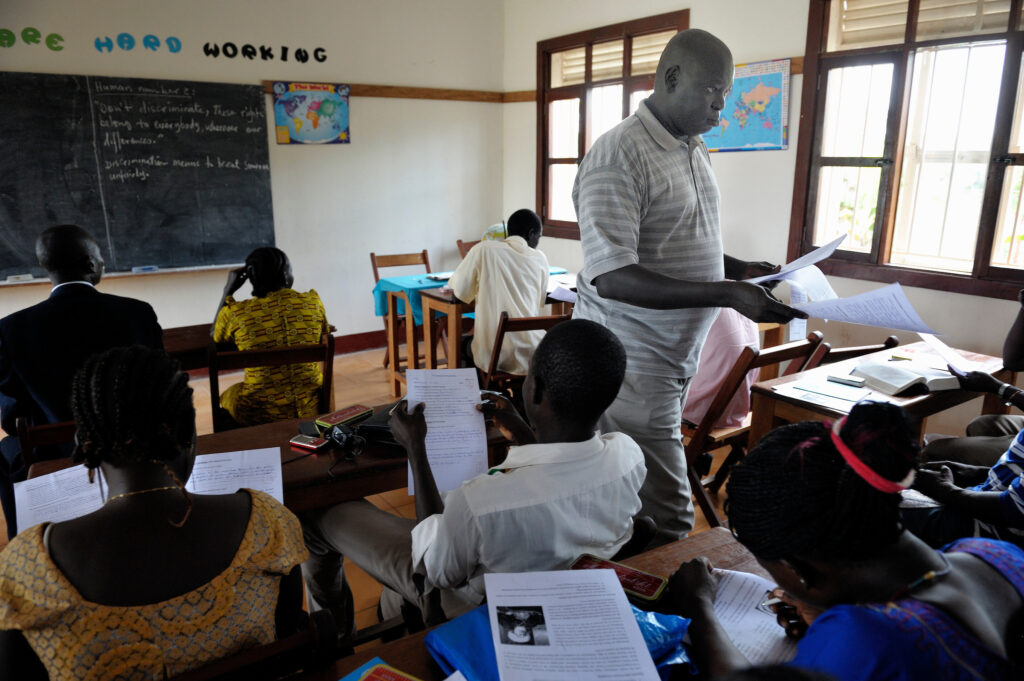
For years as a missionary, trainer, and facilitator, I heard the legend: The Church in South Sudan survived and expanded during its darkest hours because of the catechists. I accepted this intellectually, but after spending five days conducting a workshop with seventy catechists in the Diocese of Torit, that intellectual understanding transformed into profound conviction. Seeing is believing. I stood in awe before men and women who have not merely served for a few years, but for decades—some spanning 30, 40, and even nearly 50 years of faithful service. Among us were six senior catechists whose callings date back to the late 1970s and 1980s: Catechist Gedio Omigi Fastino, Victor Andre, Santina Urbano, Gabriel Lofulben, Taudesio Oyaha, and Asmina Ihanga. Seeing their weathered hands and bright eyes, I realized I was not just training pastoral agents; I was standing among the living stones that kept the Faith alive when everything else was crumbling. To trigger deep reflection, I posed two fundamental questions to the group:
- What motivated you to become a catechist?
- And what has sustained that motivation from then until today?
The answers I received were not just responses to a prompt; they were a testament to a profound spiritual endurance that deeply revitalized my own vocation as a trainer.
Passing the Torch: Mentorship Across Generations
One of the most beautiful sights during these five days was seeing the old flame igniting new fire. Catechist Luka Obura Claudio shared how he was initially inspired by his father, a builder who worked closely alongside the legendary Comboni Missionary, Fr. Jimmy.
Driven by his own deep experience of transformation, Luka actively recruited and mentored two young men, bringing them directly to this workshop. When asked by critics in his community why he continues to follow Jesus and attend church amidst so much hardship, Luka’s answer is disarmingly simple:
”What I am today is because of my Jesus and my Church. Through this alone was I able to motivate these two young men to step forward.”
The joy of mentorship came full circle when Catechist Lokang Charles spoke. He looked across the room at his own mentor with immense gratitude, sharing how he had grown up admiring his catechist and dreaming of following in his footsteps. For Lokang, standing alongside his spiritual father in the same workshop was a moment of pure grace.
”Save Africa by Africans”: Reclaiming the Church as Our Own
A recurring theme echoed throughout our days together: Local Ownership. The catechists reflected on how the faith was initially brought to them by foreign missionaries, but today, a powerful shift has taken place. The Church is no longer seen as an alien institution; it is theirs.
This truth was embodied nowhere more powerfully than in the testimony of Catechist Joseph, who lives with a physical disability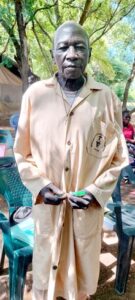
”I used to hear people say this is a white man’s church,” Joseph shared. “I used to memorize Bible songs about slavery and feel distant. But today, Jesus and the Church have become ours. We are the Church. I always uphold the famous quotation by Saint Daniel Comboni: ‘Save Africa through Africa.’ Despite my physical limitations, I volunteer to serve my Church.
It gives me joy and fulfillment. I feel I am doing something real for my Church and for Jesus.”
Miracles in the Dark: Faith in Times of War and Chaos
To truly understand the weight of their commitment, one must understand what these leaders endured. Catechist Gabriel Loful Ben (72) brought the room to a reverent silence as he recounted serving during the height of the war.
He described a harrowing reality: separated from loved ones, an entire country thrown into chaos, communities scattered, and bishops, priests, and religious forced to flee due to severe political and military pressure.
“We remained alone, like sheep without shepherds,” Gabriel recalled. “There was no normal way to practice our faith. Yet, the community and the Church survived through our simple service as catechists. How we survived is, to me, the biggest miracle.”
They were the quiet guardians who kept the embers of faith burning in the bush, ensuring that when the peace finally came, the flock still had a fold to return to.
Wounded Healers: Vulnerability, Culture, and Internal Struggles
Serving as a catechist in Torit does not mean living a life free of pain, cultural conflict, or personal contradiction. The catechists spoke candidly about the steep challenges of living their faith in a society dominated by traditional cultural practices that often conflict directly with Church teachings.
Catechist Margret Quintino offered a heart-wrenching, honest reflection about the tension between her calling and her personal reality. She shared a confrontation she had with her own daughter, who challenged her:
“Mama, you want to be a catechist, but you haven’t fulfilled the Church’s demands. You are not married in the church; Papa has two wives and you are his second wife, so you cannot receive Holy Communion.”
”I had no answer for her,” Margret admitted with striking vulnerability. “Yet, I still love my Church. I want to serve my Church—that is my strong faith. These questions challenge and suppress me, but continuing to serve while telling my children the truth about what the Church asks—even through my own struggles—gives me a strange joy in following my Church and my Jesus.”
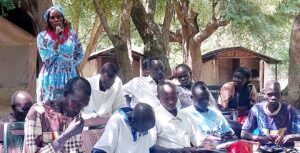
Others shared the painful realities of family divisions and doctrinal conflict. Catechist Victor Arore Okulto spoke of the heartbreak when his daughter left the Catholic Church to join an Anglican denomination. It took years of patient, loving dialogue to bring her back. “I told her, ‘Don’t go against the deep faith of our heritage,'” he shared, marking her return as one of the greatest achievements of his life.
Lokang Charles also highlighted the daily pressures from neighboring denominations attacking Catholic doctrine and confusing the youth, emphasizing that catechists must step up with sound, authentic teaching to protect their young people.
Instruments of Reconciliation in an Uncertain Tomorrow
As our five days drew to a close, the focus turned firmly toward the future. The catechists unanimously agreed that learning theory was not enough—faith must be lived visibly, authentically, and daily, without hypocrisy.
In a country still healing from deep wounds, Catechist Pabrika William Amato captured the ultimate mission of the 70 participants gathered in the room:
”We need to be good catechists to bring forgiveness, reconciliation, and peace to our society and our country. We were wounded, we are still suffering, and we are not sure about tomorrow. We live in uncertainty and constant fear. But our role as catechists is a great channel to teach gospel values. We can build bridges among tribes and communities.”
 Conclusion: A Recaptured Faith Conclusion: A Recaptured Faith
I went to Torit as a facilitator and a trainer, expecting to teach. Instead, I left as a student who had been thoroughly evangelized.
Seeing seventy catechists—young and old, able-bodied and disabled, carrying heavy personal crosses yet radiant with the joy of the Gospel—standing united to transform their communities was a profound spiritual awakening. They reminded me that the Church is not built on magnificent structures or complex strategies, but on the quiet, sacrificial ‘Yes’ of men and women who love Jesus.
Five days with the Catechists of Torit did not just teach me about their history; it recaptured my own faith.
|